
Equity investors became poorer by Rs 7.48 lakh crore in five consecutive days of market fall, where the BSE Sensex has declined by nearly 3 per cent. In the past five days, the BSE Sensex has tumbled 1,713.71 points or 2.79 per cent. This has led to an erosion of Rs 7,48,887.04 crore from the market capitalisation of BSE-listed firms in five trading sessions.

With the first quarter earnings season coming to an end, the domestic equity markets would be driven by global trends and trading activity of foreign investors this week, analysts said. The movement of global oil benchmark Brent crude and the rupee against the dollar would also drive trends in the market. "Macroeconomic indicators, trends in global stock markets and FII activities will be pivotal in shaping market trends in the coming days," Pravesh Gour, senior technical analyst at Swastika Investmart Ltd, said.

Textile stocks have exhibited a mixed performance so far this calendar year (CY23), amidst higher domestic cotton prices and tepid global demand. Shares of Page Industries, Dollar Industries, Lux Industries, and VIP Clothing have declined up to 13 per cent so far in CY23, as against a 9 per cent jump in the S&P BSE Sensex. On the contrary, shares of Arvind, Welspun India, Raymond, and Gokaldas Exports have gained up to 51 per cent, during the same period.

Among Sensex shares, HDFC Bank fell the most by 2.58 per cent, followed by SBI (2.12 per cent), HDFC (2.09 per cent), and IndusInd Bank (2.02 per cent). Axis Bank, Bajaj Finserv, M&M, L&T, Reliance, Infosys and TCS were among the major losers. In contrast, Tata Motors, Maruti, NTPC, Sun Pharma, Power Grid and Titan were among the gainers.

From the Sensex pack, Bajaj Finance, Tata Motors, Asian Paints, Power Grid, NTPC, Infosys, Nestle, Reliance Industries and UltraTech Cement were the biggest laggards. Larsen & Toubro, Tata Steel, HDFC, Bharti Airtel, HDFC Bank and Mahindra & Mahindra were among the major gainers.

In a memorable year for the equity market, Dalal Street investors added a whopping Rs 81.90 lakh crore to their wealth in 2023 as a raft of positive factors powered a stellar rally in stocks. Experts said India's strong macroeconomic fundamentals, political stability owing to the BJP's success in recent elections in three significant states, optimistic corporate earnings outlook, signals from the US Federal Reserve about three prospective rate cuts next year and heavy retail investors participation played a major role in fuelling the stock market rally in 2023. In the year 2023, the 30-share BSE Sensex jumped 11,399.52 points or 18.73 per cent.

Stocks of gold jewellery retailers have been able to retain their sheen in 2023 despite volatile gold prices. Kalyan Jewellers, Titan, PC Jewellers, Thangamayil Jewellery, and Tribhovandas Bhimji Zaveri (TBZ) have rallied 21-72 per cent so far since April as compared to a 13 per cent gain in the benchmark Sensex index. The rally gained steam on the back of gold's 6 per cen

Zomato shares may see limited upside in the near-term amid news-flow around government-backed ONDC expanding its footprint in the delivery market, believe analysts. Zomato shares have dropped 4 per cent in three days on the BSE. By comparison, the benchmark S&P BSE Sensex has added 0.2 per cent.

Benchmark stock indices Sensex and Nifty closed with losses in a choppy trade on Thursday as investors preferred a cautious approach ahead of inflation and industrial production data to be released later in the day. Unabated foreign fund outflows also hit the investor sentiment. The 30-share BSE Sensex declined by 147.47 points or 0.25 per cent to settle at 59,958.03.

From the Sensex pack, Power Grid, HDFC Bank, HDFC, Tech Mahindra, Tata Consultancy Services, Wipro, Reliance Industries and Larsen & Toubro were the major gainers. Mahindra & Mahindra, ITC, IndusInd Bank, Axis Bank, Bajaj Finance and Maruti were among the laggards.

The "asset-right" strategy, reiterated by ITC chairman Sanjiv Puri during the company's 112th annual general meeting (AGM) on August 11, received a thumbs up from the analysts. They, however, believe that sustained earnings growth and synergies with the demerged hotel's vertical will help the stock break out from the ongoing consolidation. "The stock is expected to consolidate between Rs 420 and Rs 450 in the near future.

Equity benchmark BSE Sensex closed at an all-time high of 62,272.68 on Thursday, tracking a firm trend in global markets after the US Fed minutes indicated a slower pace of rate increase that bolstered investors' sentiment. Extending its rally to the third straight day, the 30-share BSE benchmark rallied 762.10 points or 1.24 per cent to settle at 62,272.68, its record closing peak. During the day, it jumped 901.75 points or 1.46 per cent to its lifetime high of 62,412.33.he broader NSE Nifty gained 216.85 points or 1.19 per cent to end at 18,484.10.

The domestic benchmark indices - the S&P BSE Sensex and the National Stock Exchange Nifty50 - had lost close to 1.5 per cent in three days recently before gaining slightly. Notwithstanding weakness and volatility, the Nifty50 has managed to hold on to the 18,000 mark, while the Sensex has managed to stay above the 61,000 level. The performance of the stocks that comprise these front-line indices remains polarised.

With sales of cooling products turning out dismal this summer due to unseasonal rains, the stocks of related companies are now off their March highs. Shares of fan and air conditioner makers such as Voltas, Symphony, Orient Electric, Johnson Controls-Hitachi Air Conditioning and Crompton Greaves are down 5-23 per cent since March when the summer season saw a firm onset. In comparison, the BSE Sensex index is up 10 per cent.

Foreign investors pumped in Rs 11,119 crore in the Indian equities in December, making it the second consecutive monthly inflow, despite increasing concerns over the re-emergence of Covid-19 cases in some parts of the world. However, foreign portfolio investors (FPIs) have turned cautious in recent days. The inflow in December was much lower compared to Rs 36,239 crore invested by FPIs in the month of November, data with the depositories showed.

Benchmark indices rallied for the eighth day running on Thursday, ending at fresh record closing highs, amid firm global market trends and continuous foreign fund inflows. Buying in IT counters also added to the momentum.

The Indian equity market is likely to remain under pressure and rangebound over the next few months. This comes as global central banks, led by the US Federal Reserve look at a possibility of hiking rates aggressively to tame inflation. Back home, the Reserve Bank of India, too, remains data dependent in its endeavour to keep inflation in check and pursue an aggressive monetary policy stance.

'Gold could return 10% to 12% in the next two-three years.'

Influenced by ads like 'Make money sitting at home', 'Make Rs 10 lakh with just Rs 1,000', to YouTube influencers promoting 'pump-and-dump' stocks, a vast majority of small investors who mushroomed during the COVID-19 period are losing money in reckless overtrading in the market, cautions Dr V K Vijaykumar, Chief Investment Strategist at Geojit Financial Services.

Equity benchmark Sensex extended its winning run to the fourth day running on Monday and reclaimed the 58,000-level, tracking firm global trends and fresh foreign fund inflows. Buying in index major Reliance Industries added to the momentum. The 30-share BSE benchmark climbed 545.25 points or 0.95 per cent to settle at 58,115.50. During the day, it jumped 600.42 points or 1 per cent to 58,170.67. The broader NSE Nifty advanced 181.80 points or 1.06 per cent to 17,340.05.

Equity benchmarks started the first day of trade of the New Year on a positive note and ended with smart gains, propelled by buying in index majors Reliance Industries and ICICI Bank amid a firm trend in European markets. The 30-share BSE Sensex climbed 327.05 points or 0.54 per cent to settle at 61,167.79 on Monday. During the day, it jumped 382.05 points or 0.62 per cent to 61,222.79.
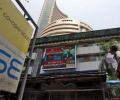
Benchmark indices Sensex and Nifty declined in early trade on Wednesday due to selling in financials, oil and IT stocks amid weak global trends.

The Sensex jumped nearly 900 points and the Nifty rallied over 272 points on Friday, bouncing back from the previous day's fall, following a positive trend in global equities and fresh foreign fund inflows. The BSE Sensex rallied 899.62 points or 1.53 per cent to end at 59,808.97 after starting the trade on a positive note. During the day, it jumped 1,057.69 points or 1.79 per cent to 59,967.04.

RBI's interest rate decision, macroeconomic data and global trends would dictate terms in the equity market in a holiday-shortened week, analysts said. Besides, the focus will also be on foreign portfolio investors' trading activity, they added. Equity markets will remain closed on Tuesday for 'Mahavir Jayanti' and on Friday on account of 'Good Friday'.

Investors' wealth eroded by Rs 3.46 lakh crore on Wednesday as equity markets took a sharp tumble amid weak global trends and foreign fund outflows. The 30-share BSE Sensex fell by 676.53 points or 1.02 per cent to settle at 65,782.78. During the day, it plunged 1,027.63 points or 1.54 per cent to 65,431.68. In line with the weak trend in equities, the market capitalisation of BSE-listed firms eroded by Rs 3,46,947.54 crore to Rs 3,03,33,258.69 crore.

Equity benchmarks climbed in early trade on Wednesday amid an overall positive trend in the global markets and ahead of the presentation of Union Budget 2023-24. The 30-share BSE benchmark Sensex jumped 516.97 points to 60,066.87. The broader NSE Nifty climbed 153.15 points to 17,815.30.

Stock market investors are expecting a balanced Budget with a focus on job creation, increased spending on infrastructure, reigning in the deficit, and bringing the economy back on track, experts said on Wednesday. Stock markets have been subdued in the run-up to the Union Budget with BSE's benchmark Sensex is almost flat so far this month. Even the corporate earning season failed to excite the markets, while some indices like IT and bankex have seen some positive movements.

Wadia Group-owned Go First Airways' (Go First) insolvency plea could trigger a 'momentum rally' in shares of rival airlines, Interglobe Aviation (parent company of IndiGo) and SpiceJet, as they look to gain bankrupt airline's market share, said analysts. On the bourses, shares of InterGlobe Aviation hit a 52-week high of Rs 2,235.95, surging 8 per cent on the BSE in Wednesday's intra-day trade, before settling 4.5 per cent higher at Rs 2,164 apiece. Those of SpiceJet and Jet Airways, meanwhile, rallied up to 6 per cent in the intra-day trade, and ended 1 per cent and 5 per cent higher, respectively, following the development, which was announced post market hours on Tuesday.

After a sharp outperformance in the mid-and small-cap segments in the first half of calendar year 2023 (H1-CY23), analysts are now turning cautious on these two market segments and suggest investors stay selective and look for valuation comfort and earnings visibility before investing. The S&P BSE Midcap index has surged 13.7 per cent in H1-CY23, and the S&P BSE Small-cap index gained 12.7 per cent during this period, data shows. The S&P BSE Sensex, in comparison, has moved up 6.4 per cent.

Shares of most of the Adani group firms ended lower on Monday, a day after it released a 413-page response to allegations of wrongdoing brought by a US-based short seller Hindenburg Research.

Benchmark indices gained for the third day running on Friday, with the Sensex climbing over 300 points amid mixed global market trends. The 30-share BSE benchmark advanced 303.38 points or 0.56 per cent to settle at 54,481.84. During the day, it jumped 448.68 points or 0.82 per cent to 54,627.14. The broader NSE Nifty went higher by 87.70 points or 0.54 per cent to end at 16,220.60.

Benchmark indices continued to rally for the third day running on Friday with the Sensex climbing 619 points in early trade to reclaim the 57,000 level. The 30-share BSE benchmark jumped 619.27 points to 57,477.06. The broader NSE Nifty advanced 189.15 points to 17,118.75.

The state with the most people has displaced the state with the largest economy in terms of investor additions. Uttar Pradesh (UP) added 126,000 new investors in April, reveals National Stock Exchange (NSE) disclosures. This is higher than Maharashtra's 118,000. Maharashtra, which is home to India's financial capital of Mumbai, has traditionally been the biggest source of investors.

Equity benchmarks Sensex and Nifty ended on a mixed note on Wednesday as the euphoria about the Budget fizzled out, with investors going for profit-taking ahead of the Fed interest rate decision. The 30-share BSE benchmark Sensex climbed 158.18 points or 0.27 per cent to settle at 59,708.08 after it trimmed most of the intra-day gains. During the day, it had zoomed 1,223.54 points or 2 per cent to 60,773.44.

The mid-and small-cap segments at the bourses have outperformed their larger peers thus far in fiscal 2023-24 (FY24). While the S&P BSE Small-cap index has surged around 5.7 per cent in FY24, the S&P BSE Midcap index has gained 4 per cent during this period. In comparison, the S&P BSE Sensex has moved up around 2.2 per cent.

Trading in the domestic stock market would be influenced by trends in the global equities, macroeconomic data and foreign fund movement in a holiday-shortened week, analysts said. Markets may face volatile trends on Monday after Federal Reserve Chair Jerome Powell's speech at the Fed's annual economic symposium in Jackson Hole on Friday.

Benchmark indices rallied on Friday with the BSE Sensex climbing over 390 points to settle above the 56,000-mark amid fresh buying by foreign funds and largely positive global market trends. Intense buying in banking and finance counters also drove the indices higher. Rising for the sixth straight session, the 30-share BSE benchmark jumped 390.28 points or 0.70 per cent to settle at 56,072.23.

Equity benchmark Sensex gained 37 points on Thursday, tracking gains in index majors Kotak Bank, L&T and Bharti Airtel amid a largely negative trend in global markets. After a largely choppy session, the 30-share BSE index ended 37.87 points or 0.06 per cent higher at 60,298 after starting the trade on a weak note. During the day, it hit a high of 60,341.41 and a low of 59,946.44.

Among Sensex stocks, Tata Motors rose the most by 2.79 per cent. NTPC, Reliance Industries, Infosys, TCS, HDFC twins, Tata Motors, ITC, Power Grid and Bajaj Finserv were among the major gainers. Tata Steel fell the most by 1.22 per cent. L&T, Sun Pharmaceuticals, IndusInd Bank and Ultratech Cement were among the losers.

Elevated food price-led inflation could become a sore point for markets, which they seem to be ignoring at current levels, observe analysts. Retail inflation in India - as measured by the Consumer Price Index (CPI) - came in at a three-month high of 6.52 per cent in January 2023, compared with 5.72 per cent in December and 5.88 per cent in November 2022. The inflation print for February, according to Madan Sabnavis, chief economist at Bank of Baroda, will be critical for the Reserve Bank of India's monetary policy committee.
